 Annual Leave Tracker
Mastering HR in a Small Business

Let's be honest, for many small business owners, "human resources" sounds like a corporate headache—something for the big players, not for a lean, agile team. But thinking of HR as just bureaucracy is a missed opportunity. Smart, simple HR isn't about red tape; it’s about building a motivated, resilient team that helps your business thrive.
Why Smart HR Is Your Small Business Superpower
If the term "HR" conjures images of endless paperwork and legal minefields, you're not alone. Many founders tackle people management on the fly, only reacting when a problem crops up. But waiting for something to go wrong is one of the most expensive mistakes you can make.
Getting proactive with HR doesn't mean hiring a massive department. It’s about putting straightforward, scalable systems in place for hiring the right people, managing them well, and setting clear ground rules for everyone.
This approach protects your business from the inside out. When you don't have formal HR practices, managers often handle situations inconsistently. That inconsistency can quickly lead to confusion, resentment, and even claims of unfair treatment.
The Real Cost of Ignoring HR
Pushing HR to the bottom of the to-do list has real, tangible consequences that can hit your bottom line hard. Without structured processes, small businesses often run into roadblocks that can seriously stunt their growth.
Here’s where a lack of HR can really bite you:
- Compliance Risks: Getting UK employment law wrong—from right-to-work checks to pension auto-enrolment—can lead to severe legal and financial penalties. These aren't just slaps on the wrist; they can be business-threatening.
- High Staff Turnover: People stick around when they know what's expected of them and see a path for growth. Without a proper framework for engagement and development, your best employees will likely walk out the door for a more organised competitor.
- Poor Hiring Decisions: A messy, unstructured recruitment process is a recipe for hiring mistakes. A bad hire doesn't just impact productivity; it can damage team morale and your company culture.
This isn’t just theory. Small businesses are the lifeblood of the UK economy, with 5.45 million businesses employing nearly 13 million people. Yet, they often grapple with huge operational challenges. In a landscape this competitive, getting the fundamentals right isn't optional—it's essential for survival. You can dig into more stats about the UK's small business landscape on money.co.uk.
The idea that small businesses can "wing it" with HR is a dangerous myth. A thoughtful HR framework, established early on, is what allows you to stay agile, minimise risk, and build a workplace that attracts and retains great people.
Building a Foundation for Growth
Ultimately, good HR practices are the bedrock of sustainable growth and a strong company culture. When you establish clear, fair processes for things like recruitment, onboarding, and managing absences, you create a stable and predictable environment.
This stability frees up your team to focus on what they do best, confident that there are consistent systems supporting them. This guide will walk you through exactly how to build those foundational pillars, step by step.
Building Your Recruitment and Onboarding Engine
Attracting top talent when you're a small business can feel like a David versus Goliath scenario. You’re up against companies with bigger budgets and well-known brand names. But this is where your size becomes your strength; you can offer agility, a real impact on the business, and a close-knit culture that larger corporations simply can't replicate.
The trick is to build a recruitment and onboarding process that leans into these advantages. Your goal isn't just to fill a seat but to find people who are genuinely energised by your mission and ready to grow right alongside you. This all starts long before the first interview, from the moment you sit down to write the job description.

Writing Job Descriptions That Attract the Right People
Think of your job description as a marketing document, not just a list of duties. Ditch the dry, corporate language. Instead, write a compelling advert that sells your vision and clearly outlines the difference the new hire will make. This is a foundational first step for effective HR in a small business.
What makes your company a great place to work? Is it the flexible hours? The direct access to the founders? The opportunity to wear multiple hats and learn new skills on the fly? These are your unique selling points—so highlight them.
Here’s how to craft a job description that actually gets noticed:
- Lead with your mission. Kick things off with a powerful sentence about what your company does and why it matters.
- Describe the impact, not just the tasks. Instead of "Manage social media accounts," try "Grow our online community and shape our brand voice across key platforms." It’s so much more inspiring.
- Be honest about the challenges. Life in a small business isn't always glamorous. Acknowledging the fast-paced or demanding aspects of a role attracts resilient candidates who are genuinely up for it.
Finding Talent Beyond the Big Job Boards
While posting on the major job sites is a good starting point, your ideal candidate might be somewhere else entirely. To find people who are a true culture fit, you often need to think a bit more creatively about where you're looking.
Consider niche job boards specific to your industry, as these often attract more passionate and specialised talent. LinkedIn groups can also be goldmines for finding engaged professionals who are actively discussing topics relevant to your business. And never underestimate the power of your own network; a referral from a trusted employee is often your best source for a quality hire.
A common mistake small businesses make is trying to compete on salary alone. Your real advantage lies in offering a role with purpose, autonomy, and a direct line to the company's success. Focus on that, and you'll attract people who value experience over just a pay cheque.
Creating a Memorable Onboarding Experience
Once you’ve hired someone fantastic, the work is far from over. Their first week sets the tone for their entire future with your company. A great onboarding process makes new hires feel welcomed, prepared, and confident from day one. In contrast, a chaotic start can create doubt and lead to early turnover.
A structured onboarding plan is absolutely essential. This doesn’t need to be complex, but it does need to be intentional. The goal is to move beyond the paperwork and focus on connection and clarity.
Your Onboarding Checklist for Success
To make a new team member feel part of the mission from their very first day, you need to get the basics right and then add a few personal touches that show you care.
Before Day One:
- Prepare their tools. Have their laptop, email account, and any necessary software logins ready to go. Nothing says "we weren't ready for you" like a tech scramble on the first morning.
- Send a welcome email. A few days before they start, send a friendly message outlining the plan for their first day, including where to go, who to ask for, and what to expect.
- Announce their arrival. Let the rest of the team know who is starting and what their role will be. This helps everyone feel prepared to welcome them aboard.
During the First Week:
- Assign a buddy. Pair them with a friendly team member who can be their go-to person for questions, show them the ropes, and take them out for lunch.
- Schedule key introductions. Book short, informal chats with the key people they'll be working with.
- Set a 30-day plan. Work together to establish clear, achievable goals for their first month. This provides immediate focus and a sense of accomplishment.
This structured approach transforms a potentially stressful experience into an exciting start, ensuring your new hire is integrated smoothly and feels valued from the get-go.
Getting Your Essential HR Policies and Handbook in Order
The thought of writing a staff handbook can feel a bit... corporate. I get it. When you're running a small business, you're juggling a dozen other things. But trust me, this isn't about creating bureaucracy for the sake of it. A simple, clear handbook is one of the most practical tools you can have. It’s all about setting clear expectations from the start, protecting your business, and making sure everyone is treated fairly.
This is one of those tasks that’s easy to put off, but you really shouldn't. Without policies written down, you're operating on 'unwritten rules', which inevitably leads to confusion and inconsistency down the line. When a tricky situation comes up, having a clear policy to fall back on takes the guesswork out of it and ensures you handle things the right way. It’s a cornerstone of good HR in a small business.
The Must-Have Policies for UK Businesses
You don’t need a 100-page document full of legal jargon. The trick is to start with the absolute essentials and write them in plain, simple English that your team will actually read and understand. For any UK business, a handful of policies are non-negotiable, both legally and practically.
These core policies really do form the backbone of any good employee handbook. Here's a quick look at the most important ones you'll need to create.
| Core HR Policies for UK Small Businesses | ||
|---|---|---|
| Policy Name | Purpose | Key Elements to Include |
| Disciplinary & Grievance Procedures | A legally required framework for addressing employee misconduct and a formal process for staff to raise complaints. | Clear steps for informal and formal stages, potential outcomes (e.g., warnings), rights to representation, and timelines. |
| Sickness Absence Reporting | To eliminate confusion when someone is unwell and to help you manage team cover effectively. | Who to contact, by what time, required information, and rules around fit notes (doctor's notes). |
| Equal Opportunities & Dignity at Work | To demonstrate your commitment to a fair, inclusive workplace free from discrimination and harassment. | A clear statement of your commitment, examples of unacceptable behaviour, and how to report concerns. |
| Health & Safety Policy | To fulfil your legal duty of care and outline how you'll provide a safe working environment for everyone. | Responsibilities for safety, procedures for reporting hazards, and specific rules for your workplace (including home working). |
Don't feel like you have to create these from scratch. That can be a huge headache. Organisations like ACAS (the Advisory, Conciliation and Arbitration Service) are a fantastic resource, offering free templates and guidance that you can adapt to fit your business perfectly.
Taming the Holiday Request Chaos
If there's one area where informal processes fall apart first, it's managing time off. A constant barrage of holiday requests coming in via email, Slack messages, and random texts quickly becomes a nightmare. Trying to keep track of it all is a recipe for disaster.
I once worked with a small creative agency with 12 employees. The owner was spending hours every month trying to piece together who was off and when from different email chains. It led to clashes, double-bookings, and last-minute panics to arrange cover. The fix wasn't some hugely complex system; it was a simple, shared Annual Leave Tracker.
By moving everything onto a central online platform, the whole team got instant clarity. Staff could see the team calendar before even asking for time off, and the owner could approve requests with a single click. It saved hours of admin and, more importantly, a ton of frustration. You can read more about how these work in this guide to online leave management systems.
Making Your Handbook a Living Document
Once you’ve drafted your core policies and sorted out a system for managing absences, the final piece is putting it all together. Compile everything into a single document—your staff handbook—and make sure every single person on your team gets a copy.
But don’t let it become a document that just gathers digital dust. Think of it as a living, breathing guide to "how we do things around here."
To make it genuinely useful, here are a few final tips:
- Get a second opinion. If you can, ask an HR consultant or a solicitor to give your key policies a quick once-over. It’s worth it for the peace of mind.
- Make it easy to find. Stick it on a shared drive, your company intranet, or whatever central hub you use. Don't just email it out once and assume everyone's saved it.
- Give it an annual check-up. Laws change, and your business will evolve. A quick review once a year is all it takes to keep your policies relevant and compliant.
Putting a bit of time into creating these foundational documents builds a stronger, more organised business where everyone knows exactly where they stand. It’s a proactive move that pays off massively in saved time, lower risk, and a happier team.
Choosing the Right HR Software and Tools
At some point, you'll hit a wall with spreadsheets and paper forms. That chaotic mess isn't just disorganised; it’s a time sink and a genuine risk to your business. Making the leap to proper HR software isn't about adding another complex system to your to-do list. It’s about finding a simple tool that finally tames the admin, cuts out mistakes, and gives you back precious hours in your day.
Modern, cloud-based HR tools aren't just for massive corporations with eye-watering budgets anymore. There’s a whole market of platforms built specifically for small teams like yours, offering affordable and scalable ways to handle the most tedious HR tasks. Imagine automated holiday tracking, secure digital employee files, and a central hub for all your people data, ready whenever you need it.
This shift has been huge for small businesses. The UK’s Human Resources Provision industry, valued at £2.2 billion, is changing as more founders bring these tasks in-house with the right tools. Instead of relying on costly external consultants for day-to-day management, you can handle it yourself, efficiently. You can read more about this industry trend on ibisworld.com.
Identifying Your Core Needs
Before you even glance at a demo, you need to be brutally honest about what’s causing the most headaches right now. Is your inbox overflowing with holiday requests? Is keeping track of everyone’s contact details and contracts a constant battle?
For most small businesses I've worked with, the essentials boil down to a few key features:
- Absence Management: Honestly, this is often the biggest and quickest win. A system where staff can request leave online and you can approve it with a single click is a game-changer. Look for a tool that automatically calculates remaining allowances and gives you a clear team calendar.
- Centralised Employee Records: You absolutely need a secure, digital home for every employee’s contract, contact information, and performance notes. No more hunting through filing cabinets or disparate files.
- Employee Self-Service: Let your team help themselves! Giving staff the power to update their own address or check their holiday balance not only empowers them but also drastically reduces the number of small queries landing on your desk.
The right tool doesn't add complexity; it removes it. Start by solving your most immediate problem—like leave tracking—and you’ll instantly see the value. Don’t get distracted by flashy features you’ll never use.
From Free Templates to All-in-One Systems
Your tech needs will grow with your team. A brand-new startup can get by just fine with some well-organised spreadsheets. But once you have more than a handful of employees, the hidden costs of doing things manually—your time, the risk of errors—start to add up fast.
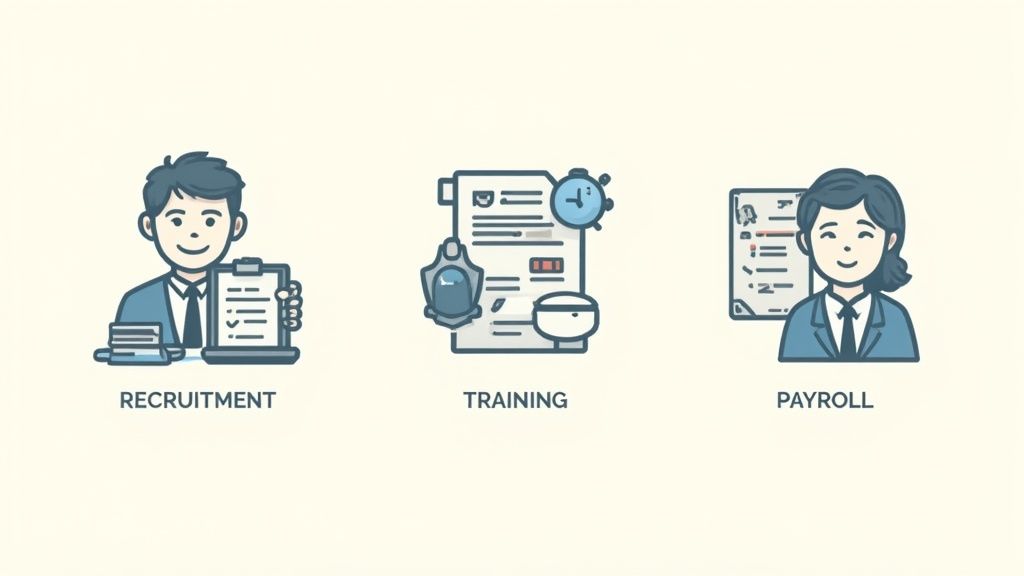
That's the tipping point where a dedicated HR system becomes a no-brainer. This diagram gives a good sense of how these systems are often structured, starting with the foundational stuff before moving into more complex areas like talent management.
As you can see, the 'Core HR' functions like personnel tracking and payroll are the bedrock. That’s where most small businesses should focus their attention first.
When you weigh it up, the small monthly fee for a good HR platform is often a fraction of the cost of the hours you'd waste managing it all by hand. The trick is finding a solution that fits where you are now. Our guide on selecting HR systems for a small business goes into much more detail on how to make the right choice for your team's size.
Making the Right Choice for Your Team
When you start comparing options, focus on two things: usability and support. A system is only good if people actually use it. Look for platforms with clean, simple interfaces and check reviews to see what people say about their customer service. You'll be grateful for it later.
Most importantly, take advantage of free trials. Don't just click around yourself; get a couple of your team members involved. Ask them to try booking a day off or finding a specific piece of information. Their feedback is gold. It’ll help you choose a tool that works for everyone, not just for the person signing the cheque.
Deciding Between In-House HR and Outsourcing
When you’re growing a business, the way you manage your team has to grow with you. That casual, all-hands-on-deck approach that worked when you had three employees starts to feel stretched and risky once you hit ten or more. This is often the crunch point where you have to ask a serious question about your HR in a small business: is it time to build a proper function in-house, or should you look for specialist support from outside?
There’s no magic formula here. The right choice is less about what other businesses are doing and more about your specific circumstances—your budget, your available time, and crucially, your own expertise (or lack of it).
Going It Alone: The In-House Approach
Handling HR yourself, or giving the responsibility to a trusted team member, is the default for many small businesses. The big advantage is control. You're shaping your company culture directly, and whoever is managing HR knows your people and the business inside out.
But this DIY route is riddled with potential pitfalls. HR isn't just about being a "people person"; it’s a professional field governed by a web of complex UK employment law. One wrong move in a disciplinary process or a poorly handled redundancy can lead to a costly tribunal claim. It also eats up a phenomenal amount of time that, frankly, is probably better spent actually running the business.
Bringing in the Experts: HR Outsourcing Explained
Outsourcing doesn’t have to mean relinquishing control of your people strategy. It’s more about getting the right level of support when you need it. It typically comes in a few different flavours:
- Pay-as-you-go Consultancy: Perfect for those one-off, high-stakes situations. Need an expert to guide you through a tricky grievance or a sensitive dismissal? You can hire an HR consultant by the hour or for a specific project.
- Retained HR Services: Think of this as having a part-time HR manager on speed dial. For a monthly fee, you get access to a dedicated professional for ongoing advice, document reviews, and general support. It’s brilliant for peace of mind.
- Fully Managed HR: This is the most comprehensive option, where an external provider handles nearly everything—from payroll and benefits to recruitment and compliance. It’s a bigger investment, but it takes a huge administrative load off your plate.
The shift towards outsourcing is undeniable. Many business owners now see it as a strategic investment, not just a way to cut costs. In fact, some reports suggest over 60% of British SMEs plan to use more HR outsourcing to stay compliant and better support their leadership. You can get more insight into these HR outsourcing trends from Breen Associates.
A hybrid model is often the sweet spot. You could manage the day-to-day HR tasks in-house using good software, but call in an expert consultant for major events like a restructuring or a complete overhaul of your employment contracts.
The image below really drives home why having structured HR support—whether internal or external—is so critical. It shows a clear correlation between documented HR policies and avoiding expensive compliance headaches.
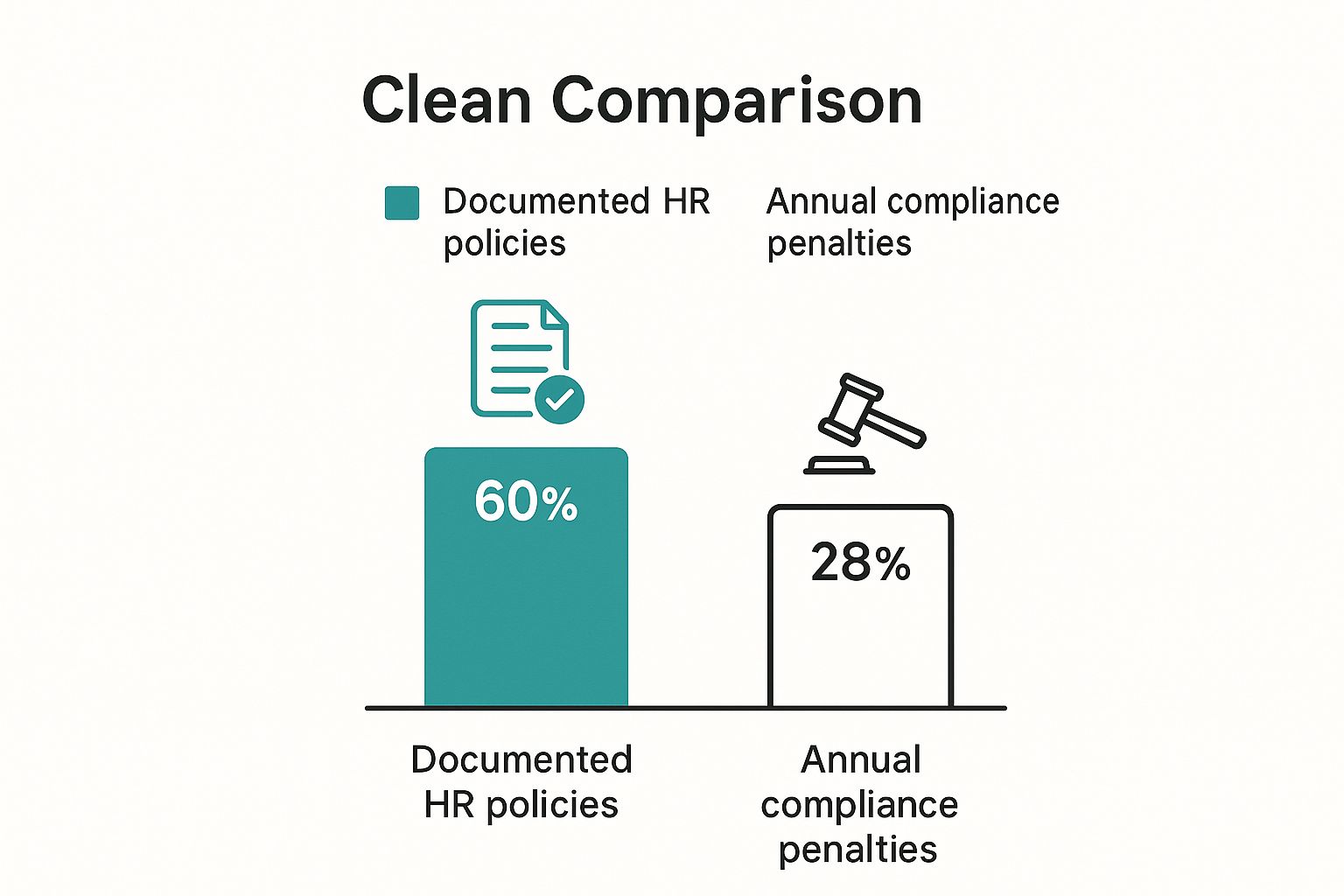
As you can see, businesses that take the time to formalise their HR processes are far less likely to get hit with penalties. It’s a compelling argument for getting your house in order.
A Quick Comparison to Help You Decide
For many small business owners, seeing the options side-by-side makes the decision clearer. This table breaks down the key differences between handling HR yourself and bringing in external experts.
| Factor | In-House HR (DIY) | Outsourced HR |
|---|---|---|
| Cost | Lower direct cost initially, but potential for high hidden costs from mistakes. | Clear, predictable monthly or project-based fees. Can seem higher upfront but often saves money long-term by avoiding issues. |
| Expertise & Risk | Relies on existing knowledge. High risk of non-compliance if not a trained professional. | Access to certified HR professionals with up-to-date knowledge of employment law, significantly reducing legal risk. |
| Time Commitment | Very high. Takes you and your team away from core business activities. | Minimal. Frees up your time to focus on strategy, sales, and operations. |
| Control | Total control over culture and day-to-day decisions. | You retain strategic control, but delegate the administrative and compliance-heavy tasks. A good partner works with you. |
| Scalability | Difficult to scale. The HR burden grows exponentially with each new hire. | Highly scalable. Your support package can grow and adapt as your business changes. |
Ultimately, the best choice depends on where you are right now. If you have the time and some foundational knowledge, a DIY approach with good software might work for a while. But as complexity and risk increase, outsourcing often becomes the more sensible and strategic option.
Making the Right Call for Your Business
So, how do you actually choose? Start by being honest about your biggest challenges.
Scenario 1: Payroll is a constant nightmare. If you dread the end of the month and the administrative headache of payroll and benefits, then a dedicated payroll provider or a fully managed HR service is a no-brainer. It removes a high-risk, time-sucking task from your to-do list.
Scenario 2: You're walking on eggshells with employee issues. Are you dealing with performance problems, team conflicts, or a looming disciplinary case? A retained HR consultant is your best friend here. They provide the objective, expert advice needed to navigate these minefields legally and fairly.
Scenario 3: You have the time but are terrified of the legal side. Maybe you're comfortable with the day-to-day people management but break into a cold sweat thinking about compliance. In this case, a retained service for on-call advice and legally sound templates, paired with good HR software, gives you the confidence and the safety net to manage effectively.
The goal is simple: find a solution that lets you get back to growing your business, safe in the knowledge that your people processes are solid, compliant, and genuinely supporting your team. By taking a clear-eyed look at your needs, you can make a choice that sets you up not just for today, but for the growth you’re aiming for tomorrow.
Answering Your Top Small Business HR Questions
When you're running a small business, HR can feel like a whole new language filled with legal jargon and tricky situations. Let's tackle some of the most common questions that founders and managers grapple with, giving you the clear answers you need to manage your team with confidence.
Do I Really Need an Employment Contract for My First Hire?
Absolutely, yes. This is one area where you simply can't cut corners.
In the UK, you have a legal obligation to provide new starters with a 'written statement of main particulars' by their first day of work. A proper employment contract not only covers this but goes much further, offering vital protection for both you and your new team member.
Think of it as setting the ground rules from the start. It clearly lays out responsibilities, pay, hours, and notice periods, which helps prevent the kind of misunderstandings that can spiral into serious legal trouble down the line. Grabbing a solicitor-approved template or using a resource from ACAS is a smart, small investment that pays for itself many times over.
What's the One HR Task I Absolutely Must Get Right?
If I had to pick just one thing, it would be getting your payroll and legal compliance spot on from day one. Nothing erodes trust faster than a mistake in someone's pay packet.
Beyond that, you have to be rigorous with UK employment law. This means things like conducting mandatory right-to-work checks, correctly managing pensions auto-enrolment, and getting holiday pay right. For example, knowing precisely what leave an employee is entitled to is crucial. Our guide on how to calculate annual leave entitlement in the UK is a great resource to ensure you're compliant.
Focus on a flawless payroll process and make sure your hiring paperwork is 100% compliant. Nailing this foundation makes every other part of HR much easier to handle.
At What Point Do I Need to Hire a Dedicated HR Person?
There isn't a single magic number here; it’s more about the growing complexity and how much of your own time is being eaten up by people-related tasks.
Most founders really start to feel the administrative burden when the team hits around 15-20 employees. Suddenly, you're juggling more leave requests, holding more performance chats, and navigating team dynamics. Even then, you probably don't need someone full-time.
The real trigger point for considering a dedicated HR manager—either part-time or full-time—is usually when your headcount approaches the 40-50 employee mark. Before you get that big, a combination of good software and bringing in an external HR consultant for the really complex stuff is often the perfect solution. It gives you expert advice without the commitment of a full-time salary.
Ready to Transform Your Leave Management?
Join 500+ companies using Annual Leave Tracker to streamline their HR processes.
Related Articles

How to Calculate Pro Rata Holidays A Simple UK Guide
Working out pro rata holidays is actually quite straightforward. At its core, it's just about making...
September 24, 2025
How to Calculate Annual Leave Entitlement: UK Guide
Figuring out annual leave entitlement doesn't have to be complicated. The basic formula is simple:...
September 24, 2025
HR Systems for Small Business A Complete Guide
Trying to run a small business using spreadsheets and a jumble of different documents is a bit like...
September 25, 2025