 Annual Leave Tracker
HR Systems for Small Business A Complete Guide
Trying to run a small business using spreadsheets and a jumble of different documents is a bit like navigating London with a hand-drawn map. It might get you around when you're just starting, but as you grow, you'll inevitably hit gridlock. An HR system designed for small businesses is the upgrade you need—it's like switching from that crumpled map to a dynamic GPS, automating the boring stuff and clearing the path for real, scalable growth.
Why Your Small Business Can No Longer Ignore HR Systems
When you first start out, managing your team with the tools you already know feels like the sensible choice. A spreadsheet for holiday requests, a simple folder for contracts, a few emails to handle onboarding – it seems to work. And for a handful of employees, it does. The problem is, this manual approach has a very low ceiling. As your team expands, that patchwork system starts to crack under the pressure, creating some serious risks for your business.
The sheer weight of admin is usually the first sign something’s wrong. A task that used to be quick, like approving a holiday request, suddenly becomes a complex puzzle. You’re checking calendars, cross-referencing team schedules, and updating multiple documents. This isn’t just inefficient; it’s a bottleneck that stops you from focusing on the strategic work that actually moves the business forward.
Navigating Compliance and Consistency
Beyond the time-suck, there's the critical issue of legal compliance. For any UK business, staying on top of employment law, Right to Work checks, and GDPR data protection is completely non-negotiable. Storing sensitive employee data in unsecured spreadsheets or forgotten folders is a huge risk, opening you up to data breaches and non-compliance fines that can be severe.
A proper HR system solves this by centralising everything securely. It ensures that the same process is followed for every single employee, every single time. That consistency isn't just about ticking boxes; it's fundamental to building a fair and transparent workplace.
An HR system isn't just an administrative tool; it's the central nervous system for your people operations. It provides the essential structure needed to manage your team effectively and scale your business without descending into chaos.
The True Cost of Manual HR
The hidden costs of sticking with manual processes go way beyond fines and wasted hours. Think about the employee experience. When it’s inconsistent or clunky, it chips away at morale and can even increase staff turnover. Imagine a new starter’s first day being a chaotic scramble for paperwork, or a valued team member getting frustrated by a vague holiday approval process. These small negative experiences add up, making it much harder to attract and keep great people.
The shift towards dedicated hr systems for small business is already happening. In fact, adoption is pretty widespread, with around 79% of UK small businesses already using them. This shows a clear recognition that you need to get the admin under control to stay compliant and grow. Since many small businesses have lean HR teams (or no dedicated HR at all), reliable technology is essential for managing the basics well. You can learn more about these HR technology trends and their impact.
Ultimately, clinging to manual methods means you're actively putting a cap on your own growth. It limits how many people you can manage effectively, how quickly you can adapt, and how strong a culture you can truly build. Recognising these pain points is the first step toward finding a system that can actually support your ambitions.
What Are The Core Features of Modern HR Software?
When you start looking at HR systems for your small business, it’s easy to feel like you’re drowning in technical jargon. Let's cut through that noise. Instead of just listing features, we'll translate them into what they actually do for you and your business.
Think of an HR system less like a single piece of software and more like a Swiss Army knife for your people management. Each tool is designed to solve a specific, everyday problem. Let’s look at the essential building blocks of any good HR platform and, more importantly, why they matter for a growing team like yours.
The Digital Filing Cabinet: Centralised Employee Records
At the very heart of any HR system is a secure, organised home for all your employee data. This is your digital filing cabinet. No more digging through confusing folders on a shared drive or, even worse, rummaging through actual paper files in a locked office.
This single, central hub keeps everything in one place:
- Personal Details: Names, addresses, and emergency contacts.
- Employment Contracts: Signed agreements, job descriptions, and salary details.
- Right to Work Documents: Crucial for UK compliance, keeping copies of passports or visas safe and accessible.
- Performance Notes: A confidential space for review notes and development goals.
Having one source of truth isn't just about being tidy. It’s a game-changer for security and efficiency, ensuring sensitive data is protected under GDPR rules and letting you find critical information in seconds.
The image below shows how this central database connects to all the other key functions within an HR system.
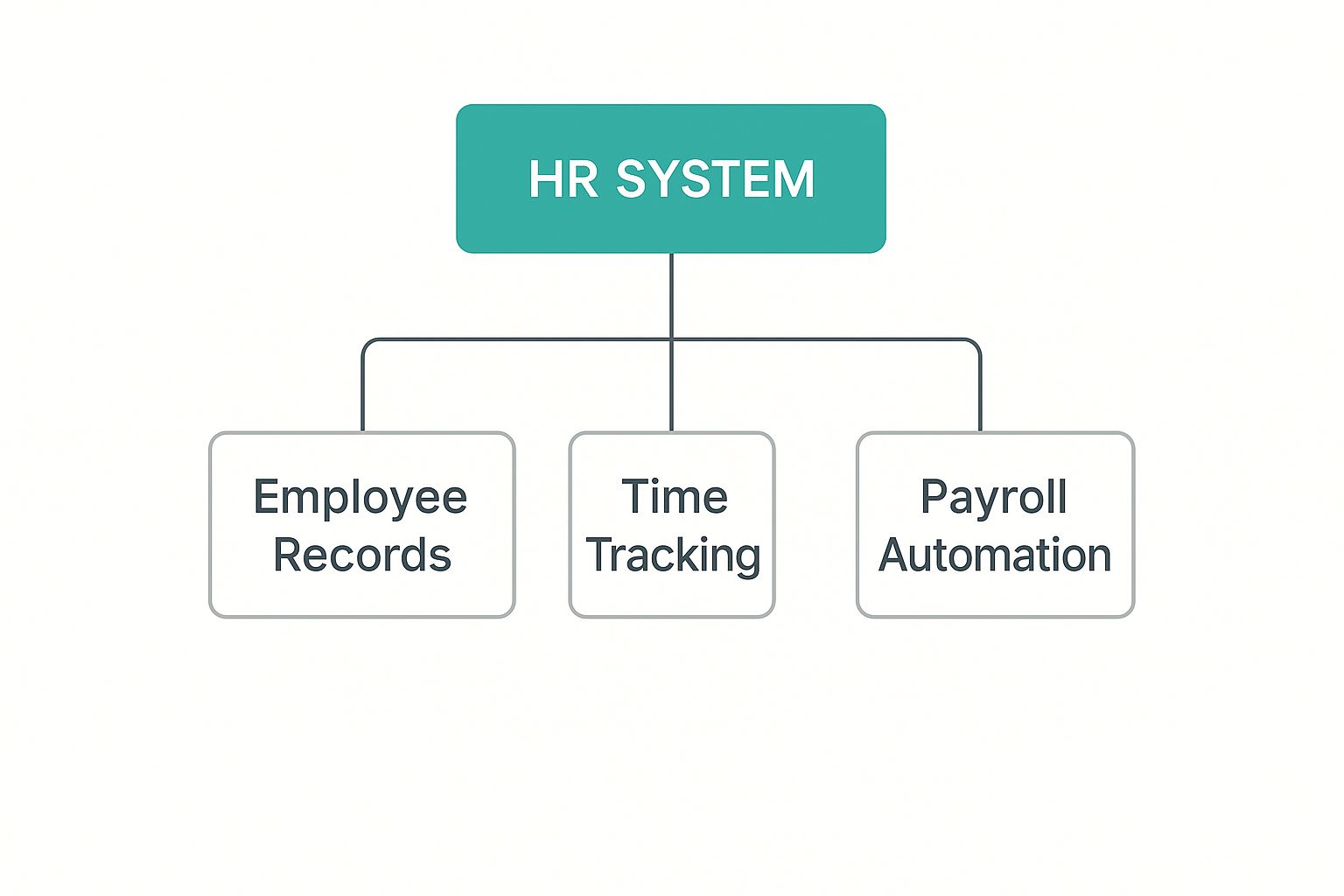
As you can see, a solid employee records database is the foundation. It’s what allows everything else, from time tracking to payroll, to run smoothly.
The Automated Timekeeper: Managing Leave and Absence
Let’s be honest, managing holiday requests through a messy inbox and a clunky spreadsheet is a nightmare. It’s a recipe for mistakes, scheduling clashes, and endless confusion over how much leave someone has left. This is exactly the problem the automated timekeeper solves.
It works like a smart, shared calendar for your entire team. Employees can log into a portal, see their holiday balance in real-time, and check the team calendar for clashes before they even submit a request. Approval is just a click away for managers.
A good leave management system can slash the time you spend on holiday admin by up to 50%. It turns a manual, frustrating task into a slick, transparent process that practically runs itself.
But it’s more than just a booking tool. A great system handles all the complex UK-specific rules for you. If you need a refresher, our guide on how to calculate annual leave entitlement in the UK dives into the details. The software automates these calculations, ensuring everything is fair and compliant for all your staff, whether they’re full-time, part-time, or on variable hours.
To simplify things, here’s a quick table breaking down the core features of an HR system and the direct impact they have on a small business.
Core HR System Features and Their Small Business Impact
| Feature Category | Key Functionalities | Benefit for Your Business |
|---|---|---|
| Employee Records | Central database, document storage, contact info | A single source of truth. Keeps you GDPR compliant and saves hours of searching for information. |
| Leave Management | Self-service requests, team calendar, automated balance tracking | Eliminates spreadsheet errors and email chains. Gives everyone clarity on leave allowances. |
| Onboarding | Automated checklists, welcome workflows, document signing | Creates a great first impression. Gets new starters productive from day one, without the paperwork chaos. |
| Performance | Goal setting, review scheduling, feedback logs | Turns annual reviews into a continuous growth conversation. Helps you support and develop your team. |
These features work together to create a system that not only saves time but also helps you build a better, more organised workplace.
The People Growth Engine: Onboarding and Performance
Getting new people started on the right foot and helping them develop is vital for your business to grow. An HR system can be your 'people growth engine', giving you the structure to manage the entire employee journey, from day one onwards.
Think about onboarding. Instead of a frantic first morning drowning in paperwork, the system can automate the entire process. It can send welcome emails, ask new hires to complete forms online before they start, and even assign introductory training. This creates a polished, professional experience that helps them settle in and start contributing much faster.
The same goes for performance management. These tools provide a clear framework for meaningful check-ins, allowing you and your managers to:
- Set clear, measurable goals.
- Track progress throughout the year.
- Schedule reviews and keep records of conversations.
- Build personal development plans.
This structured approach stops performance reviews from being a once-a-year tick-box exercise. It becomes an ongoing cycle of feedback and growth that helps you spot your rising stars, support those who need a bit of help, and build a more motivated team. You’re not just managing people—you’re investing in them.
The Real-World Pay-Off from Investing in an HR System
Knowing the features of an HR system is one thing, but what really matters is how they translate into genuine, real-world value. Bringing the right HR software into your small business isn't just about tidying up your admin. It's a strategic move that pays dividends across the entire company.
We see the impact in three critical areas: bullet-proof legal compliance, a serious boost in day-to-day efficiency, and the groundwork for a much stronger company culture. These pillars don't work in isolation; they build on each other to turn an admin tool into a real engine for growth.
Let's break down how it all works.
Build a Fortress of Compliance
For any UK business owner, navigating employment law can feel like tiptoeing through a minefield. Right to Work checks, GDPR, watertight employment contracts… a single slip-up can lead to eye-watering fines and a damaged reputation. A good HR system acts as your compliance fortress, automating and standardising your processes to keep the business safe.
Forget about storing sensitive documents in risky spreadsheets or unlocked filing cabinets. A centralised system locks down all employee data, ensuring it’s managed correctly, access is tightly controlled, and you have a clear audit trail for every single action.
This organised approach makes staying on the right side of the law much simpler by:
- Centralising Right to Work Checks: Securely storing and managing copies of passports and visas.
- Ensuring GDPR Adherence: Keeping personal data protected with controlled access and robust security features.
- Standardising Contracts: Using approved templates to create consistent, legally sound employment contracts for every new hire.
By weaving these safeguards into your daily operations, you dramatically lower your risk and can finally stop worrying about compliance headaches.
Reclaim Your Time with Boosted Efficiency
One of the first things you’ll notice after setting up an HR system is how much time you and your team get back. Just think about all those hours spent each week on repetitive tasks: approving holiday requests, chasing signed policies, or manually updating someone's address. These little jobs pile up, draining your most valuable resource—time.
An HR system automates these tedious workflows, literally giving your team hours back in their week. This isn't just a nice-to-have; it's a chance to shift focus from mind-numbing admin to the strategic work that actually grows the business.
This efficiency jump is crystal clear when it comes to payroll, a process that’s notoriously tricky and high-risk. In fact, more and more small businesses are choosing to outsource, with over 60% of British SMEs expecting to increase their use of expert HR services by 2025. This trend makes sense when you learn that over 90% of UK businesses admit to making monthly payroll mistakes, which can lead to hefty penalties.
An integrated HR and payroll system slashes these risks by ensuring accuracy and compliance, freeing up your team for more important things. You can discover more insights about HR services for small businesses in the UK to see how this approach pays off.
Cultivate a Stronger Company Culture
A positive company culture doesn't just appear out of thin air. It’s built on a bedrock of consistency, fairness, and transparency. An HR system provides the very structure you need to deliver a brilliant employee experience, right from the moment a new hire accepts their offer.
A smooth, automated onboarding process makes a fantastic first impression, helping new starters feel welcome and ready to go from day one. When performance reviews are handled through a clear, structured system, conversations about growth become constructive and fair, not arbitrary. People know what’s expected of them and can see a clear path forward.
This consistency builds trust and has a direct impact on retention. When people feel valued and treated fairly, they’re more engaged, more productive, and far more likely to stick with you for the long haul. The organised processes an HR system brings are directly linked to a happier, more stable workforce.
How to Choose the Right HR System for Your Business
Choosing an HR system can feel a bit like trying to pick a new car. You know you need one, but the sheer number of models, features, and acronyms is enough to make your head spin. It’s easy to get lost comparing endless feature lists.
So, where do you start? The best place is right inside your own business. Forget the fancy brochures for a moment and ask yourself: what are the top three HR headaches that are really slowing us down?
Is it the never-ending email chain just to get a holiday approved? Maybe your onboarding feels more like a chaotic paper chase than a warm welcome. Or perhaps you lie awake at night worrying if your employee data is truly secure. Pinpointing your biggest challenges first gives you a clear mission: find a tool that actually solves your problems.
Define Your Must-Have Criteria
Once you know what you’re trying to fix, you can build a practical checklist to measure potential HR systems against. This isn’t about finding a platform that does everything; it's about finding one that does the things you desperately need, and does them brilliantly.
Your evaluation should really hinge on four critical areas:
- Ease of Use: Is the interface actually intuitive? Let's be honest, if your team finds it clunky or confusing, they just won't use it. You'll have wasted your investment. Look for a system that feels simple from the get-go.
- Scalability: The system you choose today has to grow with you. Ask potential providers how their platform handles expansion. Can it easily add more employees, new departments, or different policies without creaking at the seams?
- Key Integrations: Your HR system won't operate in a silo. It needs to talk to your other essential software, especially your payroll system. A poor integration can create more manual work, completely defeating the purpose of getting a system in the first place.
- UK-Specific Compliance: This one is non-negotiable. The platform absolutely must be built with UK employment law at its core. That means being fully compliant with GDPR for data protection, handling HMRC reporting, and calculating annual leave entitlements correctly.
Focusing on these practical points will help you quickly sift through the noise and dismiss any options that just aren't right for your business.
To make this process easier, we've created a simple checklist. Use this table to score each system you evaluate, giving you a clear, at-a-glance comparison.
HR System Selection Checklist for Small Businesses
| Evaluation Criteria | Questions to Ask Vendors | Your Rating (1-5) |
|---|---|---|
| Ease of Use | Can my team learn this quickly without extensive training? Is the mobile experience as good as the desktop? | |
| Core Feature Fit | Does it solve my top 3-5 HR problems effectively (e.g., leave tracking, onboarding, data storage)? | |
| Scalability | What is the process for adding new employees? Are there limitations as we grow? | |
| Integrations | Does it integrate seamlessly with our existing payroll software? What about other tools we use? | |
| UK Compliance | Is the system fully GDPR compliant? Is it updated with current HMRC and UK leave regulations? | |
| Pricing Model | Is the pricing transparent? Are there any hidden setup, support, or integration fees? | |
| Customer Support | What support channels are available (phone, email, chat)? What are the typical response times? | |
| Reporting | Can I easily generate the key HR reports I need for business planning and compliance? |
This structured approach prevents you from being swayed by flashy features you'll never use and keeps the focus firmly on what will deliver real value to your business.
Understand the Pricing Models
HR software pricing can sometimes feel deliberately opaque, but most providers stick to a few common structures. For small businesses, the most popular is a per employee, per month fee. This model is great because your costs scale predictably as your team expands.
But don't stop there. You need to understand the total cost of ownership. Get direct answers from vendors about any other charges:
- Is there a one-off setup or implementation fee?
- Are there extra costs for customer support or staff training?
- Will we be charged more for the integrations we need?
A system that looks like a bargain at first glance can quickly become expensive once you tally up all the add-ons. Look for providers with transparent, all-inclusive pricing so you can budget accurately and avoid nasty surprises.
Prioritise Responsive Customer Support
When you have a question or hit a snag—and you will—you need to know that real help is easy to find. The quality of customer support is often an afterthought, but it shouldn't be.
As you evaluate your options, find out exactly what level of support is included. Will you be speaking to a dedicated account manager who knows your business, or will you be routed to a generic helpdesk queue? Check their support hours and typical response times. A provider with fast, knowledgeable support can be a lifesaver, especially when you're first getting set up.
Put Your Shortlist to the Test
Once you’ve narrowed it down to two or three strong contenders, it’s time for the test drive. Never, ever commit to a system without seeing it in action for yourself. Sign up for free trials and book live demos with their teams.
Most importantly, get the people who will use the system every day involved in the trial. Have your line managers approve a test holiday request. Ask a new starter to log in and update their personal details. This is the only way to truly know if a system is as user-friendly as it claims to be. By exploring the full range of leave and absence management features, you can see exactly how the software will ease your specific frustrations and make daily work better for the whole team.
How HR Systems Help You Win the Talent War
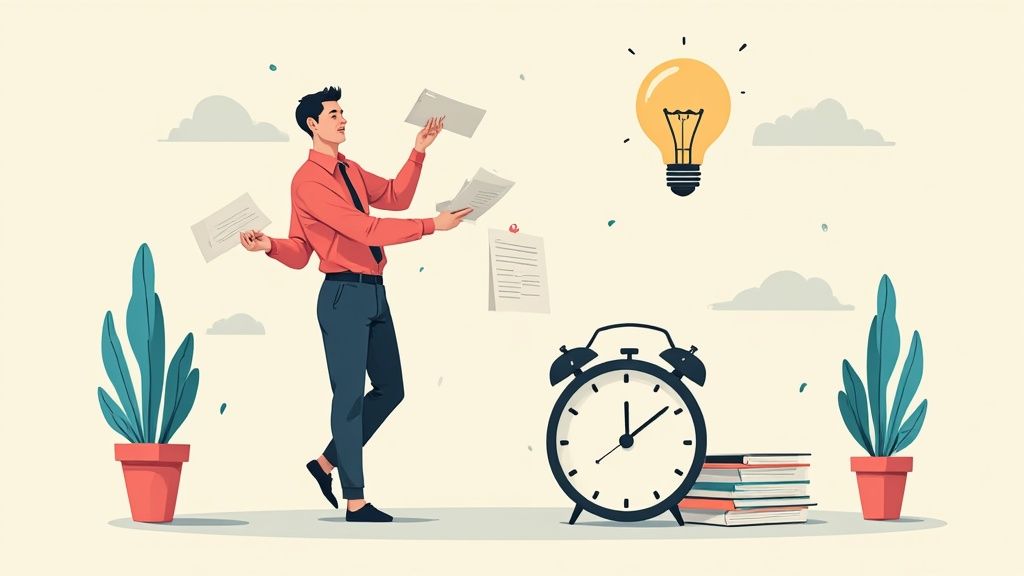
In a tight market, finding and keeping great people isn't just an HR task—it's a fundamental business strategy. For any growing company, this "talent war" can feel relentless. The right HR system for your small business acts as your command centre, completely changing how you attract, hire, and retain the people who will make or break your success. It helps you shift from just filling empty seats to building a real talent pipeline.
The battle often kicks off with the hiring process itself. If you're juggling applications in a chaotic inbox, losing track of promising candidates, and sending inconsistent messages, your business can look disorganised. This is where an Applicant Tracking System (ATS), a core component of most modern HR platforms, makes an immediate impact.
An ATS brings order to the chaos. It lets you manage your entire recruitment pipeline, from posting a job ad on multiple boards with a single click to tracking every candidate’s progress. It also provides a central place for your team to leave feedback, ensuring you never let a brilliant applicant slip through the cracks and can move quickly to make an offer.
Creating an Unforgettable First Impression
Once you’ve found the right person, the effort to keep them starts right away. A clunky, paper-heavy onboarding process can create a terrible first impression, planting seeds of doubt before your new hire has even logged on. A good HR system digitises and automates this entire experience.
You can send out offer letters for e-signature, share welcome packs, and assign day-one training all through the platform. This creates a smooth, professional welcome that makes new starters feel valued and genuinely excited to join. It also gets them up to speed and contributing much faster.
Think of it this way: a streamlined, digital onboarding process is your company's first promise to a new employee. It signals efficiency, organisation, and a commitment to their experience from day one.
Building a Workforce That Stays and Grows
Getting talent through the door is only half the battle; keeping them is what really counts. UK small businesses often find this tough, with many struggling to provide the growth opportunities that people now expect. In fact, a recent study showed that a lack of decent training is a massive barrier to retention for 75% of small businesses.
This is where an HR system shifts from an admin tool to a strategic asset. By including features for performance management and employee development, it helps you build a culture where people want to learn and grow. It also helps you adapt to modern work demands, like managing the 45% of entrepreneurs now looking to hire hybrid workers. You can read more about the critical hiring challenges facing UK small businesses to get the full picture.
Ultimately, an HR system does more than just paperwork. It gives you the structure to:
- Set clear performance goals and track progress against them.
- Facilitate regular, meaningful feedback sessions.
- Identify skills gaps and create opportunities for growth.
When you invest in your team’s development, you create a more skilled, motivated, and loyal workforce. You stop just filling roles and start building careers. That’s how a small business can punch above its weight and win the war for talent.
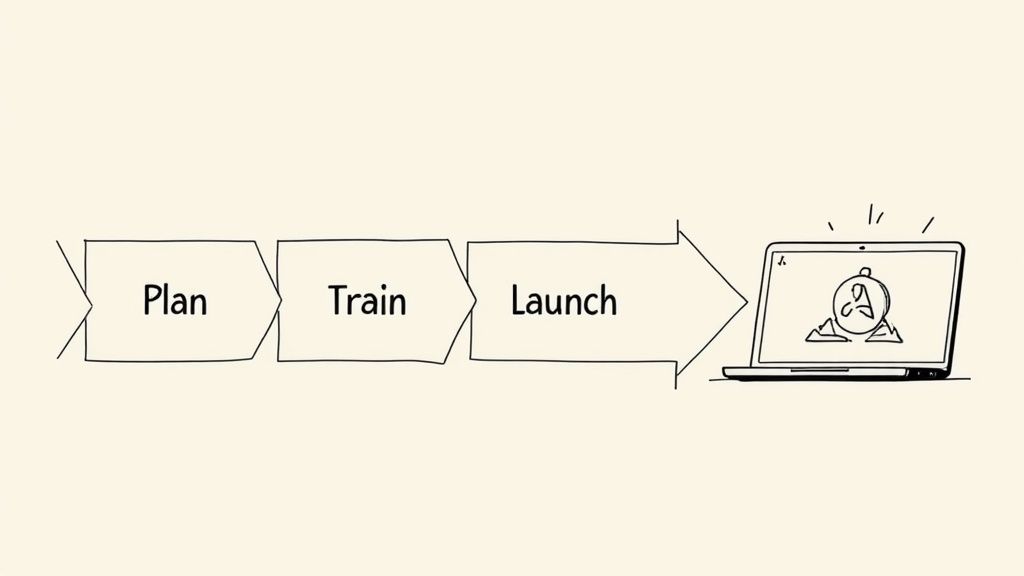
A Practical Guide to Getting Your New HR System Up and Running
Choosing the right HR system for your small business is a massive win, but even the best software is useless if your team doesn't embrace it. A smooth, well-thought-out rollout is what makes the difference between a smart investment and a frustrating expense. Here’s a simple roadmap to get it right from day one.
Forget the chaotic "big bang" launch. A phased, step-by-step approach is always the better way to go. It keeps daily work humming along and gives everyone a chance to get comfortable without feeling overwhelmed. Think of it less like a frantic race and more like a journey with clear, manageable stages.
Stage One: Getting Your Data and Settings Sorted
The first real task is moving all your existing employee information into the new system. This needs a sharp eye for detail to get it right. Before you even think about migrating, use this as a chance to do a data "spring clean"—get rid of old records, fix inaccuracies, and make sure everything is spot-on. A clean start saves a world of trouble later.
Once the data is in, it's time to mould the system to fit your business like a glove. This isn't a one-size-fits-all situation. You'll need to:
- Set up leave policies so they match your exact rules for annual leave, sick days, and everything in between.
- Customise approval workflows to make sure requests automatically land with the right manager, every time.
- Create user permissions to control who sees what, ensuring sensitive information stays that way.
Getting this configuration right means the software starts working for you, not making you work for it.
Stage Two: Bringing Your Team on Board
With the technical bits handled, the spotlight turns to your people. A successful launch is all about making your team feel empowered by the new tool, not burdened by it.
Run short, punchy training sessions that focus on the things they'll actually be doing—like booking a holiday or updating their contact details. Keep it practical and relevant to their daily routines.
One of the biggest mistakes people make is forgetting to explain the "why." You have to sell the benefits. Show them how it’ll make their lives easier—no more paper forms getting lost, no more endless email chains. This is how you build genuine excitement and get that all-important buy-in.
Finally, turn the launch into a positive event. Send clear, friendly emails about the go-live date and what everyone can expect. Have simple guides ready and make sure you're around to answer questions. A supportive, helpful launch is what encourages people to jump in and really use the new system, making it a true asset for your business.
A Few Final Questions About HR Systems
Diving into the world of HR systems for a small business often brings up a few last-minute questions. Getting these sorted will give you the confidence to pick a platform that genuinely helps your business and your team thrive.
Let's tackle some of the most common things business owners ask when they’re ready to take the plunge.
How Much Should I Expect to Pay for an HR System in the UK?
The cost of HR software can vary quite a bit, but most companies charge on a straightforward ‘per employee, per month’ basis. For a small business, you’re typically looking at a range between £2 to £10 per employee.
What you pay really boils down to the features you need. A starter plan will handle the essentials like keeping employee records and managing time off. If you want more advanced tools for things like recruitment, performance reviews, or slicker payroll integrations, you’ll be looking at the higher end of that price range.
A good tip is to always ask providers about any hidden costs, like setup fees or minimum contract terms, so you know exactly what you’re signing up for.
What if We Outgrow Our First HR System? Can We Switch?
Yes, you can definitely switch systems, but it’s a project that needs a bit of careful planning. The main hurdle is always moving your data over – we’re talking about years of employee records, past performance reviews, and payroll history. It’s a delicate process where you can’t afford mistakes.
When you're picking your first HR system, one of the most important things to ask is how you can get your data out. A system that lets you easily export everything into a common format (like a .csv file) will make your life so much easier if you ever decide to move on.
If I Have an HR System, Do I Still Need HR Advice?
Think of an HR system as a brilliant tool for managing your processes and data, but it’s not a replacement for a human expert. The software is fantastic for keeping you compliant on a day-to-day basis, like making sure holiday allowances are tracked perfectly.
However, it can’t give you nuanced advice on tricky people problems.
When you’re dealing with sensitive situations like disciplinary action, employee grievances, or making redundancies, you absolutely need to speak with a qualified HR professional. Their expertise is what protects you from making a costly legal mistake. For example, while the system logs annual leave, you might need a guide on how to calculate pro rata holidays for your part-time staff—a task that needs both system data and legal know-how.
Ready to simplify your absence management and give your team the clarity they deserve? Annual Leave Tracker offers an intuitive, UK-focused solution designed for growing businesses. Start your free trial today.
Ready to Transform Your Leave Management?
Join 500+ companies using Annual Leave Tracker to streamline their HR processes.
Related Articles
How to Calculate Pro Rata Holidays A Simple UK Guide
Working out pro rata holidays is actually quite straightforward. At its core, it's just about making...
September 24, 2025
How to Calculate Annual Leave Entitlement: UK Guide
Figuring out annual leave entitlement doesn't have to be complicated. The basic formula is simple:...
September 24, 2025